I think it's safe to say that we like to be connected to our cars and we like for our gadgets to be connected to us AND our car.
So that being said, let's take a look at the best (and perhaps worst) of technologies that have been integrated into the automotive experience. Here are some of my personal favorites:
1. Bluetooth integration. Okay, I know bluetooth is kind of an old thing at this point, but bringing bluetooth to the automobile was kind of a legendary thing. Especially for safety--now nearly any new vehicle has the technology embedded within it that allows drivers to use the phone in a hands free way.
2. Cars that text. Voice to text is an up and coming technology that maybe still has a few tweaks required before it runs really smoothly. I kind of view it as being just a "Text Fail" machine (you've seen those posts else where), at least right now. But just imagine if it got as good as we are at texting (without nimble thumbs, of course). I mean, that would have to improve people's driving on the road... right? I guess we'll see!
3. Pandora Connectivity (and the Chevy "My Link" system). I am a pretty huge fan of Pandora (Songza is another favorite), and the ability to have it in my car with the menus displayed on the entertainment cluster is pretty huge. I mean, this takes radio a step beyond what satellite radio did in comparison to traditional radio. Pandora does everything satellite radio does (and more, in my opinion) and to top it all of, it's FREE. Bam. Love free. Also, quick tip: Did you know you can make a Pandora station with a comedian? Then, you can listen to hours and hours of assorted stand up comedy. Blew my mind when I found this out; you probably already know this.
Now, in order to talk about what's next in vehicle connectivity, I can't ignore the whole concept of cars that drive themselves. The industry has a goal of bringing these self-driving vehicles to the consumer market by 2020. That is only 6 years from now... which means, if they actually do it, it's going to be a big deal. Because take it from an automotive engineer, 6 years is not really a long time at all. Especially not to develop a brand new product that will ROCK the segment.
So, maybe in six years from now we'll all be sporting a ride like this one. Time will tell!
Showing posts with label driving. Show all posts
May 30, 2014
May 24, 2014
American Muscle 2013: A Year in Review
Muscle Cars. It's just one of those things that Americans do best. It was our in to the automotive market back when the Germans were leading the way in passenger cars. Muscle cars were sleek, sexy, and above all, they had a big ol' powerful engine.
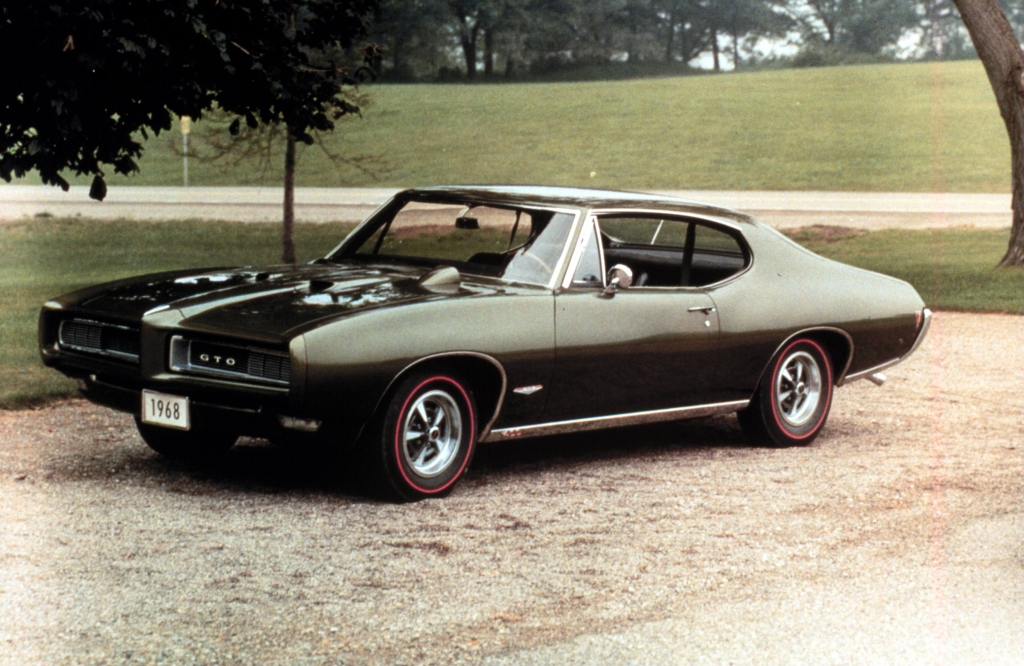
Here's one of the first American Muscle cars--The Pontiac GTO. Isn't she a beauty?
American Muscle has had a long a varied history, and it certainly isn't going away any time soon. Let's take a look at the past year and what's new in this high-speed, (generally) high-ticket segment.
First off, we can't ignore the 2013 Ford Mustang. The Mustang is a regular in American Muscle, and a favorite. (Disclaimer: I had a yellow Mustang back in the day. So, the following review might be a tad biased, maybe.) I think most would agree, this is a good looking car.
But more than looks, the 2013 Mustang boasts a reasonable starting MSRP of only $22k and at that price includes a 305 horse power V6 engine, HID headlights (love 'em) and 6-speed manual transmission (obviously). All of this makes the Mustang a great choice for the American Auto enthusiast who doesn't want to spend a small fortune on his car, but still wants to have all the thrills of a much pricier auto.
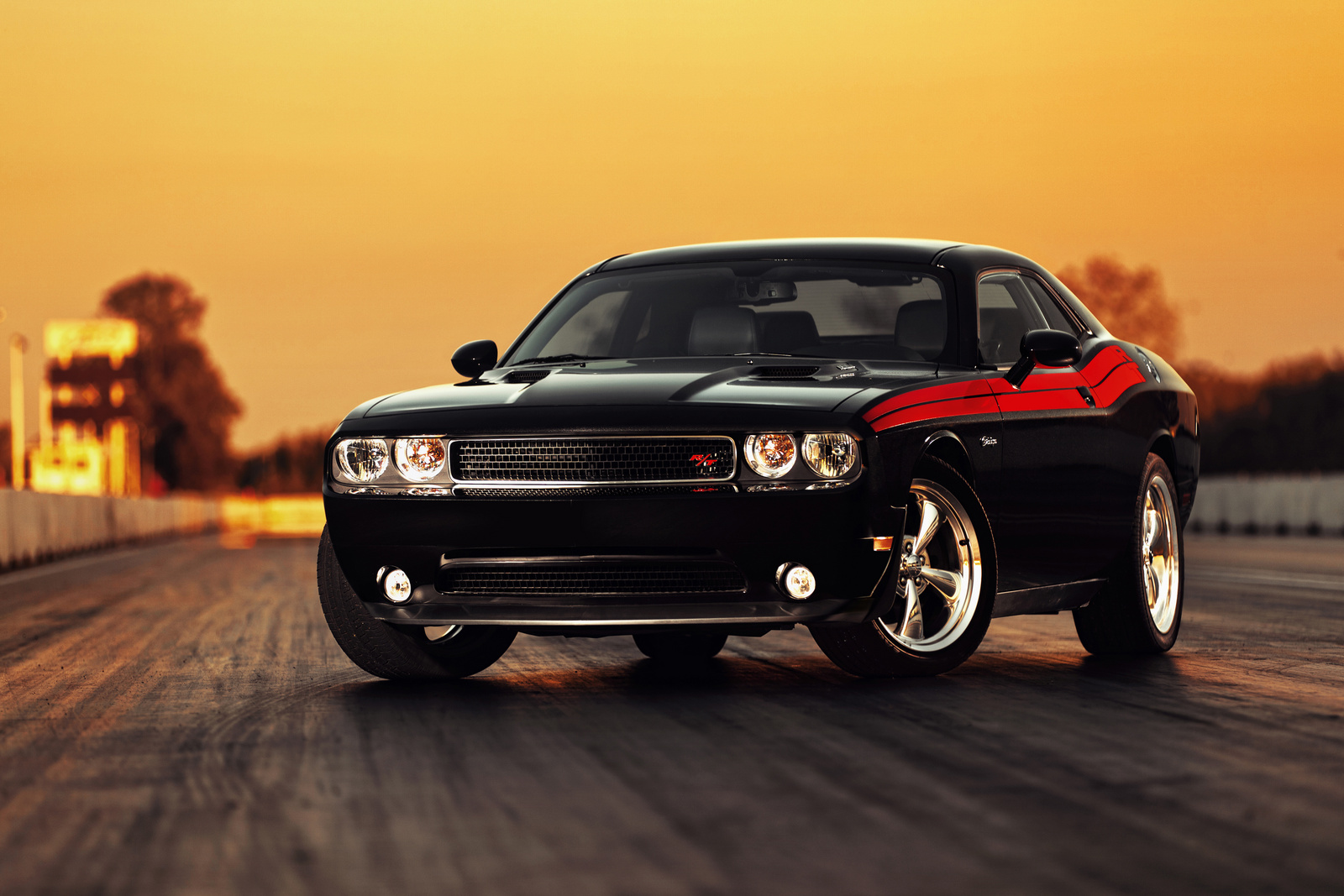
Next up: the 2013 Dodge Challenger.
Last but certainly not least, the 2013 Chevy Camaro.
Wowza.
All-in-all, 2013 was a good year for American Muscle cars. And just these three are all really impressive showings for the segment. I might even say that you can't really go wrong with any of them (except for if you opted for a Challenger with an automatic transmission, which would most definitely be wrong).
Labels:
American Muscle,
Automotive,
Camaro,
Cars,
Challenger,
Chevrolet,
Dodge,
driving,
Ford,
GTO,
Mustang,
Pontiac
May 19, 2014
How to Drive Like a Formula One Driver: Tips for Improving Your Skills on the Road
Who in their right mind doesn't want to be cruising around in this ride (okay, maybe whipping or speeding or some other fast sounding word is more appropriate than 'cruising')?
And, despite the borderline too tight suits, who doesn't want to be one of these guys? I have an inkling that the ladies love them... AND they drive cars that travel at 220 mph (a small added bonus?)!
I know, you're probably thinking, 'Tommy, how can I be one of these gods of the road?" Well, don't fret, I've got an easy, three step plan for you... well, sort of.
So, let's break it down. What are the core techniques to being a Formula One racer? Don't worry, I've got you covered. And it's easy, there are only four main techniques. Easy peasy, right?
1. Taking Turns
Alright, considering the energy that can be lost on a tight turn if done improperly (sorry, a little engineering got past me there... please don't hold it against me!) Alright, there are lots of highly technical articles out there about this, but let me explain this in the easiest, quickest way possible: When you enter a sharp turn (think, merging onto another freeway), the key is to minimize the amount of time that you're on the breaks (if at all). You also want to stay to the outside of any turn at all points in driving (obviously, still within your lane, where applicable). And when you get to the apex of the turn, crank up the gas. You can use this part of the turn to gain your speed back.
2. Drafting
I've already covered drafting in an earlier post, so let's skip that part, shall we?
3. The "egg-under-the-pedal technique"
Here I'm assuming that you are driving a manual transmission, but it can apply to automatic transmissions too. Any time that you are using the clutch (or break), imagine that there is a raw egg carefully balanced between the floor board of the car and the bottom of the pedal. Now, when you are applying or letting off the clutch, keep that egg in mind. Too quick to apply the clutch, and you'll definitely crack the egg. Too quick to let off the clutch, it'll roll to the back of the car and will stink up your ride for sure. If you're not already an expert at shifting smoothly, this will make you an expert. Your passengers will thank you, trust me.
If that seems like a lot to remember, check out this video, and get inspired!
Now, go give it a go! Within reason, of course... for us lowly civilians, there's this thing called the law.
Labels:
Automotive,
driving,
expert,
formula one,
how to,
racing,
shifting
May 12, 2014
How to Buy a Car like a Boss: Researching, Selecting and Negotiating like a Champ
Buying a car is a big deal. It's almost like having a baby. Okay, maybe not (calm down, ladies, I was kidding). But, it does require a great deal of preparation and maybe even training (think lamaze) in order to be done like a boss.
Alright, let's dive in. First, and I feel a little like a substitute teacher doing this (you remember the one), take a look at this video from Edmunds. Sure, it's a little dry, but he hits all the major points.
Okay, so step 1: Make sure you do your homework. Know what the car in question is really worth. I think this is probably a no brainer, but I had to say it. Just in case. There are lots of tools you can use to research. Edmunds.com, of course, is one of them. Here's a few others that are worth a look: Kelley Bluebook and the up and coming truecar.com.
Alright, so you have a good handle on what the car is actually worth. That's awesome! On to step two...
Step 2: Time to negotiate. If you're going into a dealership, you'll most likely be bombarded with over the top friendliness (which, let's admit, that's WAY better than pushiness). It's important to not be distracted with the bells and whistles (or four quadrant charts) or be deterred into something else that you didn't originally set out to get. Since you already know how much the car is worth, the rest becomes a lot easier. Just keep these couple of pointers in mind:
(1) Aim low! If you start under what you think is reasonable for the car, your chances of paying that amount are better than if you just lead in with that figure (he'll probably meet you half way in the end)
(2) Know that you can always walk away. For you, there will be that exact same car someplace else that is more willing to negotiate. It's the salesman that has something to lose--your business! I think that playing "hard to get" can also work to your advantage.
(3) The salesman is person too, trying to do his job and meet his boss's expectations. This is important to keep in mind as I think some folks can get a little carried away with the whole negotiating business and end up making things a bit too personal. So, always be respectful and professional. After all, what goes around comes around.
Master these easy steps and congratulations, you can buy a car like a boss. Go get 'em, champ.
Alright, let's dive in. First, and I feel a little like a substitute teacher doing this (you remember the one), take a look at this video from Edmunds. Sure, it's a little dry, but he hits all the major points.
Okay, so step 1: Make sure you do your homework. Know what the car in question is really worth. I think this is probably a no brainer, but I had to say it. Just in case. There are lots of tools you can use to research. Edmunds.com, of course, is one of them. Here's a few others that are worth a look: Kelley Bluebook and the up and coming truecar.com.
Alright, so you have a good handle on what the car is actually worth. That's awesome! On to step two...
Step 2: Time to negotiate. If you're going into a dealership, you'll most likely be bombarded with over the top friendliness (which, let's admit, that's WAY better than pushiness). It's important to not be distracted with the bells and whistles (or four quadrant charts) or be deterred into something else that you didn't originally set out to get. Since you already know how much the car is worth, the rest becomes a lot easier. Just keep these couple of pointers in mind:
(1) Aim low! If you start under what you think is reasonable for the car, your chances of paying that amount are better than if you just lead in with that figure (he'll probably meet you half way in the end)
(2) Know that you can always walk away. For you, there will be that exact same car someplace else that is more willing to negotiate. It's the salesman that has something to lose--your business! I think that playing "hard to get" can also work to your advantage.
(3) The salesman is person too, trying to do his job and meet his boss's expectations. This is important to keep in mind as I think some folks can get a little carried away with the whole negotiating business and end up making things a bit too personal. So, always be respectful and professional. After all, what goes around comes around.
Master these easy steps and congratulations, you can buy a car like a boss. Go get 'em, champ.
April 21, 2014
Why Tailgating (ah-hem, drafting) Is Good For Fuel Economy
Nerd Alert: I'm going to engineer out on you in a second, so don't freak out if I drop some buzzwords like "Thermodynamics" or "Surface Integral" or, well... okay--I won't actually use any of those words. False alarm. But seriously, I want to talk about drafting (or in some circles, tailgating) and I think it's about time that we get technical about it. So let's get started.
I'd venture to guess that most of us can remember back to good old driver's training where we learned to keep two car lengths between us and the vehicle ahead of us. And for most people (read: those of us that do not treat an automobile as an extension of ourselves), this is probably a good idea. I mean, safety first. So, from this point on, let's just assume that the drafter in question actually knows how to handle his/her car.
Alright, now that we have the technicalities out of the way: Why do we draft in the first place? To me, the reasons are two fold. First, we tailgate to make our presence known. Until we can broadcast our thoughts into another persons car--perhaps something like "Dear Sir, Please move into one of the right most lanes if you plan to travel at a speed that is 20 miles per hour less than the posted speed."--tailgating is our next most readily available option to make our opinion known on the road.
But what about when that person in the late '90's Prius and no muffler doesn't get the message? Is there any benefit remaining? Most would say, "Just pass on the right, Tommy." But wait one second, you guys. I contend that there is some benefit to sticking behind this individual and practicing the respected art of drafting. For a brief introduction, take a look at Mike Rahal's video on how extreme tailgating has gotten in the context of NASCAR.
So let's take a closer look at the details (look away if you're squeamish when it comes to math). As already alluded to in the video, the whole basic concept of drafting is reducing the amount of drag on your car by taking advantage of the airflow of the car in front of you.
The symbols in this equation (working from left to right) are: the force of drag (FD), the density of air (rho), the velocity of the car relative to the air (v), the coefficient of drag (CD) and the cross sectional area of the car (A). So when you draft, you're using the airflow coming off the car in front of you to reduce the velocity of the air acting on your car. Therefore, the force of drag on your car is significantly reduced! The reduction of drag is especially large as the air speed is reduced since the force of drag is related to the velocity of the air acting on your car by a square.
Let's do just a small thought experiment. Let's say (just to make the numbers easy) if you were to be travelling alone on the highway going 100 m/s (v) and have a cross sectional area (A) of 10 square meters (all other factors are 1), the force of drag is equal to 50,000 N. Now, if you start drafting behind someone such that v becomes something like 50 m/s, the force of drag drops to 12,500 N. So, if the velocity of the air around you drops by half, your drag force is a quarter of the amount it was before!
I'll spare you the free body diagram, but if there is only 25% of the force on your car, you'll only be using 25% of the fuel you'd need if you weren't drafting!
So, go on--draft in the name of fuel economy (and physics).
I'd venture to guess that most of us can remember back to good old driver's training where we learned to keep two car lengths between us and the vehicle ahead of us. And for most people (read: those of us that do not treat an automobile as an extension of ourselves), this is probably a good idea. I mean, safety first. So, from this point on, let's just assume that the drafter in question actually knows how to handle his/her car.
Alright, now that we have the technicalities out of the way: Why do we draft in the first place? To me, the reasons are two fold. First, we tailgate to make our presence known. Until we can broadcast our thoughts into another persons car--perhaps something like "Dear Sir, Please move into one of the right most lanes if you plan to travel at a speed that is 20 miles per hour less than the posted speed."--tailgating is our next most readily available option to make our opinion known on the road.
But what about when that person in the late '90's Prius and no muffler doesn't get the message? Is there any benefit remaining? Most would say, "Just pass on the right, Tommy." But wait one second, you guys. I contend that there is some benefit to sticking behind this individual and practicing the respected art of drafting. For a brief introduction, take a look at Mike Rahal's video on how extreme tailgating has gotten in the context of NASCAR.
So let's take a closer look at the details (look away if you're squeamish when it comes to math). As already alluded to in the video, the whole basic concept of drafting is reducing the amount of drag on your car by taking advantage of the airflow of the car in front of you.
The symbols in this equation (working from left to right) are: the force of drag (FD), the density of air (rho), the velocity of the car relative to the air (v), the coefficient of drag (CD) and the cross sectional area of the car (A). So when you draft, you're using the airflow coming off the car in front of you to reduce the velocity of the air acting on your car. Therefore, the force of drag on your car is significantly reduced! The reduction of drag is especially large as the air speed is reduced since the force of drag is related to the velocity of the air acting on your car by a square.
Let's do just a small thought experiment. Let's say (just to make the numbers easy) if you were to be travelling alone on the highway going 100 m/s (v) and have a cross sectional area (A) of 10 square meters (all other factors are 1), the force of drag is equal to 50,000 N. Now, if you start drafting behind someone such that v becomes something like 50 m/s, the force of drag drops to 12,500 N. So, if the velocity of the air around you drops by half, your drag force is a quarter of the amount it was before!
I'll spare you the free body diagram, but if there is only 25% of the force on your car, you'll only be using 25% of the fuel you'd need if you weren't drafting!
So, go on--draft in the name of fuel economy (and physics).
Labels:
Automotive,
drafting,
drag,
driving,
NASCAR,
physics,
racing,
tailgating
Subscribe to:
Posts (Atom)